If you’ve wandered through Muizenberg Park lately, you may have noticed something exciting taking shape. A once-overlooked corner is being transformed into a thriving showcase of local biodiversity, demonstrating that even small spaces can make a big impact.
Led by the Friends of Muizenberg Park and supported by The Table Mountain Fund, the Muizenberg Park Fynbos Restoration Project is restoring indigenous fynbos to the heart of the community. But it’s about more than planting. The project reconnects people with the Cape Floristic Region, the smallest yet most botanically diverse floral kingdom on Earth. It shows how everyday public spaces can become vibrant hubs for conservation, learning and connection.
Restoration
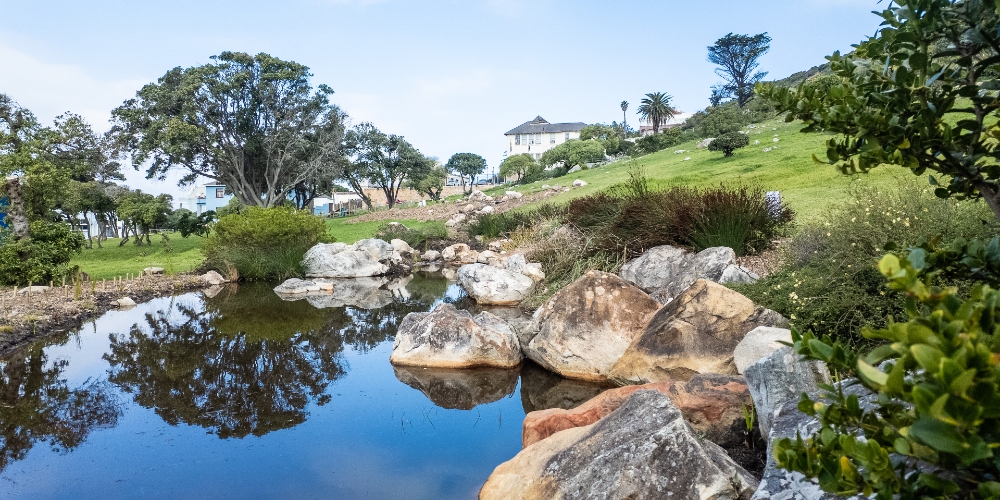
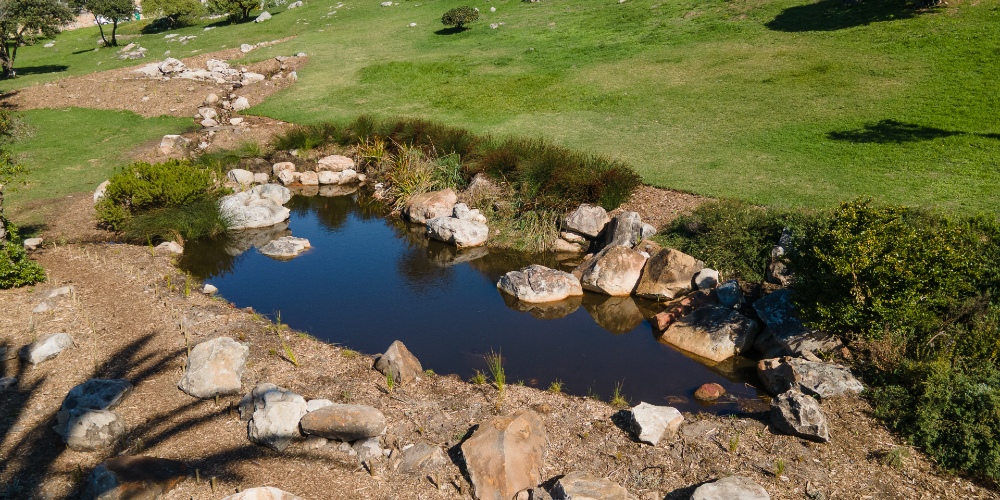
For many locals, the park evokes a particular nostalgia. Years ago, the stream was a favourite backdrop for wedding photographs and local gatherings, and the project has now revived it. Today, that connection endures through events such as the annual Stream Party, where residents gather along the banks for paper boat races, tea and cake. Beyond its social impact, Muizenberg Park is a remarkable ecological site that has historically supported four distinct fynbos ecosystems and serves as a unique botanical crossroads. Bringing this fragile ecosystem back to life is far more than planting flowers. Around 1000 square metres of degraded, waterlogged lawn were carefully excavated and transformed into a functioning wetland with seasonal and perennial, spring-fed ponds. Nearly 3000 locally sourced fynbos and indigenous seedlings have since been planted, and earlier phases recorded an impressive 90% survival rate.
The restoration is also helping to safeguard species disappearing from the wild. It is becoming a haven for some of the Cape’s rarest plants. It will soon host the Blue Water Lily (Nymphaea nouchali), now extinct in the wild, alongside threatened species such as Serruria foeniculacea and Psoralea glaucina.
Open to All
Rather than fencing off nature, the restoration has been designed as a living classroom, inviting visitors to experience conservation firsthand. A standout feature is the Fragrance Pathway, created by project coordinator John Venn, whose passion for indigenous essential oils inspired its design. As the 15 species of aromatic fynbos mature, visitors can gently brush the leaves of buchu, rose geranium, and helichrysum to release their distinctive natural scents, providing an immersive way to engage with the Cape’s remarkable plant life.
Elsewhere, shallow, child-friendly areas invite young explorers to paddle safely among aquatic plants, while carefully positioned indigenous vegetation naturally protects more sensitive species. Plans include wooden bridges across the wetland and QR-coded information boards featuring plant lists, habitat information, and insights into the restoration project.
A Thriving Ecosystem
For conservationists, one of the most rewarding moments in any restoration project is witnessing wildlife’s return. At Muizenberg Park, that happened almost immediately. Within 72 hours of the new ponds being created, Cape River frogs had already moved in and begun breeding. Today, the unmistakable call of the Cape Clicking Frog echoes through the wetland, while more than 300 arum lilies have been planted to attract the tiny Arum frog. Conservationists are also monitoring the area for the endangered Western Leopard Toad.
Cape River Crabs have returned in healthy numbers, and their comeback has helped to bring back one of the ecosystem’s most exciting visitors: the Cape Clawless Otter. The return of this top predator is a clear sign that the wetland is once again supporting a healthy, connected food web. Although Phase 3 earned “Pride Project” status from The Table Mountain Fund, the restoration remains firmly a community effort. A significant share of funding comes from locals who buy tickets to tour John Venn’s award-winning private garden, Coniston, directly opposite the park. Every visit helps fund the next stage of the restoration.
And there is still plenty more to come. With the wetland now flourishing, the Friends of Muizenberg Park are focusing on restoring the park’s remaining three indigenous habitats: Sand Fynbos, Peninsula Granite Fynbos and Peninsula Sandstone Fynbos.
The long-term vision is to transform this once-forgotten corner of Muizenberg into the most accessible place to experience the full range of fynbos ecosystems across this section of Table Mountain. At a time when conversations about sustainability often centre on large-scale environmental challenges, Muizenberg Park offers a hopeful reminder that meaningful change can begin at home. Sometimes all it takes is a community willing to roll up its sleeves, restore a stream, and let nature do the rest.
Location: Camp Road, Muizenberg
Website: www.instagram.com/muizenbergpark/
Related Articles
Sustainable Fashion in Cape Town
Adaptive surfing in Muizenberg